






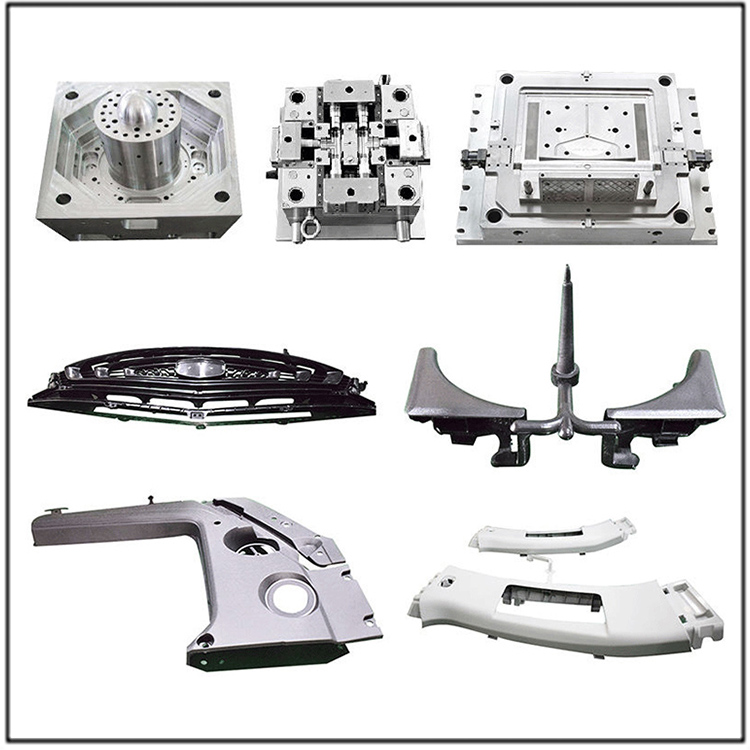
Types of Injection Mold Steels and Their Selection
Types of injection mold steels and their selection: Dongguan Changyuan Plastic Products Co., Ltd. uses many types of steel for manufacturing plastic molding injection molds, and their service performance, processing performance, and market supply prices vary.
Carbon structural steel
Carbon structural steel is low in price and has good machinability. When the carbon content is low, its strength is poor; when the carbon content is high, its strength is higher, but its hardenability is poor and heat treatment deformation is large. The polishing performance of carbon structural steel is not very good. Carbon structural steel can be used to manufacture injection mold forming parts that do not require high dimensional accuracy and surface roughness and for which the production batch of plastic parts is not large. It can also be used to manufacture guide pillars, guide bushes, and injection mold support components.
Alloy structural steel
Types of injection mold steels and their selection: The service performance of alloy structural steel is better than that of carbon structural steel, and the service life of parts manufactured for injection molds is longer than that of carbon structural steel. Classified by main alloying elements, alloy structural steels used for plastic molds can be divided into chromium steel, chromium-nickel steel, chromium-molybdenum steel, chromium-nickel-molybdenum steel, chromium-molybdenum-aluminum steel, chromium-manganese-titanium steel, etc. Although the service performance of alloy structural steel is better than that of carbon structural steel, its hardenability, heat treatment deformation, and other properties are not much improved. It is generally not suitable for making integral dies and punches with complex shapes or large sizes. In some large molds, it is used to make movable forming parts or forming inserts with smaller local dimensions that require higher hardness and wear resistance, for which it is still suitable.
Carbon tool steel
The strength, hardness, and wear resistance of carbon tool steel are better than those of structural steel, but its toughness is poor, its hardenability is poor, and heat treatment deformation is large. Carbon tool steel includes T7, T7A, T8, T8A, T10, T10A, etc. They can all be used to manufacture injection mold forming parts in cases where the plastic part size is not large, the shape is simple, heat treatment deformation has little effect, and the production batch is relatively large. In addition, in complex molds, they can be used to make forming inserts and are often used to make injection mold parts such as guide pillars, guide bushes, ejector pins, and return pins.
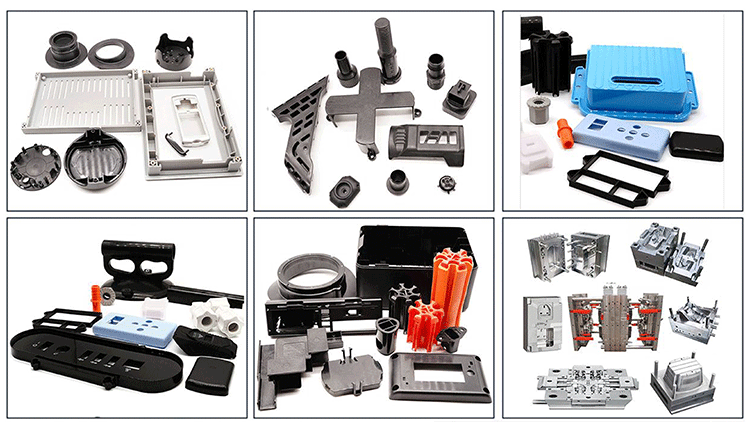
Alloy tool steel
Types of injection mold steels and their selection: Hot work mold steel and cold work mold steel among alloy tool steels can not only manufacture metal forming injection molds but can also manufacture other plastic forming molds. Many of their properties are better than those of carbon structural steel and carbon tool steel, but their prices are relatively high. They are usually mainly used to manufacture injection mold forming parts with complex shapes, high precision requirements, and relatively large product production batches, and are especially widely used in injection molds for molding thermosetting plastics or reinforced plastics.
Cold work mold steel is divided into two types: low-alloy and high-alloy. The former includes 9Mn2V, 9SiCr, CrWMn, 9CrWMn, etc., and the latter includes Cr12MoV, Cr6WV, etc. Low-alloy cold work mold steel is relatively easy to machine, and its hardenability, wear resistance, and polishability are all better than those of structural steel. Its heat treatment deformation is also relatively small, and among mold steel types it is relatively inexpensive. It is suitable for manufacturing forming parts with relatively complex shapes and relatively high precision in the mass production of thermoplastic plastic parts. High-alloy cold work injection mold steel has very high strength and hardness, and its wear resistance, oxidation resistance, corrosion resistance, and polishing performance are all relatively good. Its heat treatment deformation is also very small, while its machinability, grindability, and toughness are relatively poor, and its price is also relatively high. Its scope of application is similar to that of low-alloy cold work mold steel, but its service life is relatively long, and it is more widely used in molding molds for reinforced plastics or thermosetting plastics. Bearing steel GCr15 can also be used as cold work mold steel. Its hardenability, hardenability, and wear resistance are all relatively good. In injection molds, it is mainly used for sliding parts with high wear resistance requirements.
Hot work mold steel includes 3Cr2W8V, 5CrMnMo, 5CrNiMo, 4Cr5MoSiV, 4Cr5MoSiV1, etc. Their characteristics are good high-temperature mechanical properties and heat resistance, as well as impact resistance. They can withstand very high working temperatures and working pressures and are particularly suitable for manufacturing forming parts of various plastic molds, but they are expensive.
Stainless steel
Types of injection mold steels and their selection: Stainless steels that Dongguan Changyuan Plastic Products Co., Ltd. can use to make injection mold parts include 40Cr13, 95Cr18, 14Cr17Ni2, etc. They can work for long periods under certain temperature and corrosion conditions without changes in their mechanical and physical properties. Therefore, when molding plastic parts that easily produce volatile corrosive gases, stainless steel can be used to manufacture forming parts or other injection mold parts that come into contact with the plastic melt, such as sprue bushes, runner plates, ejector pins, and sprue pullers. However, the price of stainless steel is much higher than that of general steel, and its processing performance is also relatively poor.


 Send Email
 Skype
