






Core Technical Standards for Manufacturing Precision Plastic Molds for the Automotive Industry
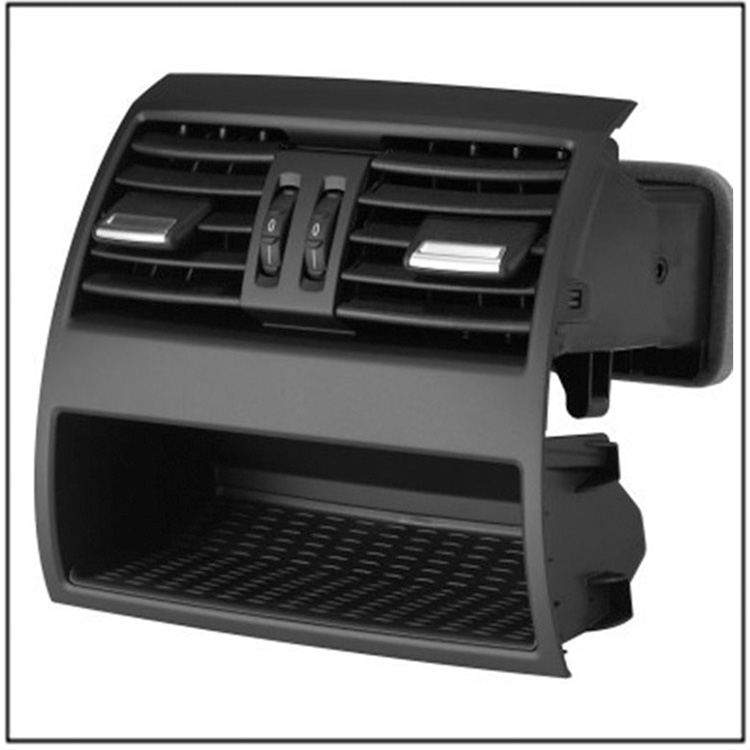
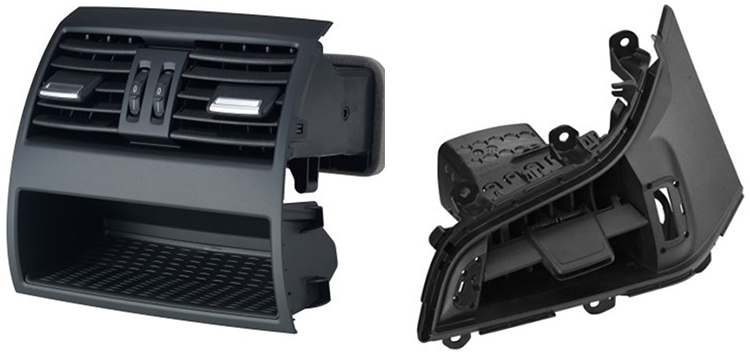
The automotive industry is one of the core application areas for precision plastic molds. A large number of components—including automotive interior and exterior trim, electronic connectors, and functional structural parts—rely on plastic molds for mass production. Compared with ordinary consumer products, automotive components impose more stringent standards on mold precision, service life, and stability, and also place higher demands on mold factories' technical strength and quality control systems.
I. Basic Performance Requirements for Automotive Plastic Molds
Automotive components generally involve large production volumes and long lifecycles and are related to safety and assembly functions. Therefore, molds must meet three core indicators:
High service life requirements: The service life of molds for conventional automotive components is required to be no less than 500,000 shots; molds for core structural parts and universal parts are required to reach more than 1 million shots; and some molds for global vehicle models are even required to reach 2 million shots, placing extremely high demands on steel materials and processing quality.
High precision and consistency: Automotive components have strict assembly tolerances. The tolerances for precision connectors and functional structural parts are often required to be within ±0.02 mm, and dimensions must be highly consistent in mass production, with no batch differences caused by mold wear.
High stability: Automotive components have long mass-production cycles, and molds need to operate continuously over the long term. They are required to have low failure rates and stable molding parameters, reducing machine adjustment and downtime maintenance time during mass production.
II. Steel Material Selection and Heat Treatment Specifications for Automotive Molds
Steel is the foundation of automotive mold service life, and material selection must strictly match the component's material, output, and functional requirements.
Molds for ordinary interior and exterior trim parts: Pre-hardened steels such as 718H and 738H are mostly selected, suitable for ordinary materials such as PP and ABS, with a service life that can meet the requirement of 300,000–500,000 shots.
Molds for precision structural parts and appearance parts: High-quality steels such as NAK80 and S136 are often selected. They have good polishing performance and dimensional stability, are suitable for high-gloss appearance parts and precision structural parts, and can achieve a service life of 500,000–800,000 shots.
High-life wear-resistant molds: For glass fiber reinforced materials and high-output components, cold work mold steels such as SKD11 and DC53 are selected. After vacuum heat treatment, the hardness can reach above HRC58. Combined with surface nitriding or titanium plating treatment, the service life can exceed 1 million shots.
Heat treatment of automotive molds must use vacuum heat treatment processes to avoid oxidation and decarburization of the steel and ensure hardness uniformity. Key parts also need deep cryogenic treatment to eliminate internal stress, improve dimensional stability, and avoid deformation during mass production.
III. Core Points of Structural Design for Automotive Molds
The structural design of automotive molds must not only meet molding requirements but also take into account the stability, maintainability, and safety of long-term mass production.
High degree of standardization: Automotive molds generally use standard mold bases from brands such as LKM and Futaba, and standard parts such as guide pillars and guide bushes, ejector pins, and springs are selected from well-known brands such as Punch, ensuring interchangeability and service life and facilitating later maintenance and replacement.
Optimized cooling system: Conformal cooling water channel design is adopted to ensure uniform mold temperature, reduce product deformation and internal stress, and at the same time reduce mold thermal fatigue and extend service life.
Reliable core-pulling and ejection structures: Automotive components have complex structures and often involve sliders, inclined ejectors, threaded core-pulling, and other structures. During design, stress strength and wear resistance must be fully considered to avoid wear and jamming after long-term production.
Safety and poka-yoke design: Molds need to be equipped with safety devices such as limit switches, anti-collision pillars, and misfeed detection to avoid mold damage caused by misoperation during production.
IV. Processing and Quality Control Standards for Automotive Molds
Precision processing and strict quality control are the guarantees for automotive molds to achieve design indicators.
Processing equipment requirements: Core parts of automotive molds need to be processed by high-precision equipment such as high-speed CNC, slow wire EDM, mirror spark machines, and jig grinders. Key dimensional accuracy must be controlled within 0.005 mm to ensure interchangeability and fit accuracy of parts.
Full-process inspection: Dimensional inspection is required after each processing procedure is completed. Re-inspection is carried out after rough machining, after heat treatment, and after finish machining respectively to correct deviations in a timely manner. After assembly is completed, mold closing inspection is carried out to ensure that the parting surface fits closely and the seal is tight.
Material and process traceability: A complete traceability file must be established for each set of automotive molds, including steel material certificates, heat treatment reports, processing inspection records, mold trial reports, etc., to meet the quality traceability requirements of the automotive industry.
V. Mold Trial and Mass-Production Verification for Automotive Molds
Before delivery, automotive molds must undergo strict mold trial verification to ensure that mass-production requirements are met.
Process parameter verification: Continuous production is carried out under standard injection molding parameters to verify product dimensional stability and appearance consistency and confirm that the molding window is wide and parameters are easy to control.
Continuous production testing: Continuous trial production of no fewer than several hundred shots is carried out to check mold operating status, cooling effect, and smoothness of ejection and reset, and to troubleshoot potential failure points.
Dimension and material verification: Samples need to pass CMM full-dimensional inspection, and key performance parts also need to undergo material performance, environmental aging, and other tests to confirm compliance with automotive industry standards.
We have been deeply engaged in the precision plastic mold industry for 25 years and possess complete automotive-grade mold development and manufacturing capabilities. We can undertake custom manufacturing of various automotive plastic molds, including automotive interior and exterior trim, electronic connectors, and functional structural parts. We strictly follow automotive industry quality control standards to ensure the long-term mass-production stability of molds. If you have automotive plastic mold development needs, you may provide product drawings and technical requirements, and we will provide a professional development plan.


 Send Email
 Skype
