






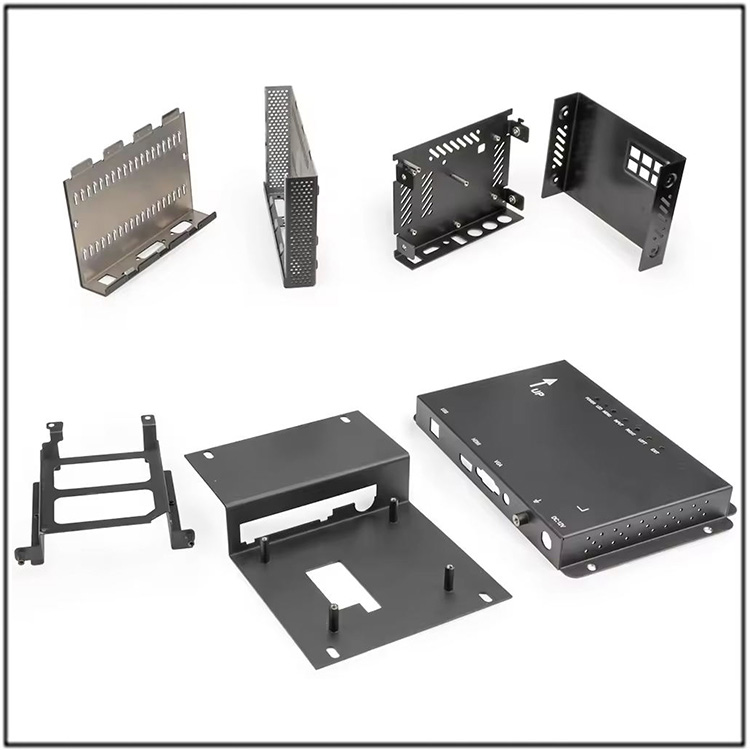
Analysis of Precision Metal Stamping Processes
In the modern industrial manufacturing system, precision metal stamping is hailed as the "art of metal forming." For a professional hardware customization factory, this is not merely a processing technique but also a concentrated reflection of the enterprise's core competitiveness. Today, we will take you deep into the production front lines to provide a comprehensive interpretation of the technical logic and craftsmanship behind precision metal stamping.
1. Precision Stamping: More Than Just "Pressing" Down
Many people mistakenly believe that stamping is merely simple physical compression, but this is not the case. Precision metal stamping involves applying pressure to metal coils or sheets using molds installed on a press, causing plastic deformation or separation to obtain workpieces with the desired shape and dimensions. The key lies in the word "precision," with tolerance control often requiring ±0.01mm or even tighter.
Our custom hardware factory strictly adheres to a four-in-one control system of "materials, molds, equipment, and processes" at this stage. Starting from material selection, whether it's stainless steel, cold-rolled plates, copper alloys, or aluminum alloys, each batch of raw materials undergoes rigorous quality inspection to ensure parameters such as elongation and hardness meet processing requirements.
II. Core Process Flow Breakdown
Mold Design and Manufacturing (The Core Essence)
The mold is the "heart" of the stamping process. We employ high-precision slow-wire cutting and mirror EDM technology to ensure the clearance of the mold's cutting edge is controlled at the micron level. A well-designed mold structure not only guarantees product accuracy but also extends mold lifespan and reduces the unit cost for customers. In metal fabrication, we typically recommend progressive dies, compound dies, or engineering dies based on production volume to achieve a balance between efficiency and cost.
Stamping (core process)
This process includes multiple operations such as blanking, bending, stretching, and flanging. Taking the stretching process as an example, the metal undergoes a complex stress-strain process under the action of the punch and die. Our technical team effectively addresses industry pain points such as wrinkling, cracking, and springback through precise edge pressure control and lubrication solutions, ensuring uniform wall thickness and dimensional stability of the stretched parts.
Precision Inspection (Quality Assurance)
At the custom hardware factory, we introduced high-precision equipment such as anime imaging measuring instruments and coordinate measuring machines (CMM). Each batch of products undergoes first-piece inspection, process inspection, and final inspection to ensure that every hardware component's aperture, edge clearance, and flatness meet the drawing specifications.
III. Core Advantages of Hardware Customization
As a specialized hardware custom manufacturing factory with deep industry expertise, we fully understand that "non-standard" signifies both challenges and value. We offer end-to-end services ranging from sample prototyping to mass production. Whether it's intricate irregular parts or high-strength structural components, we can perfectly replicate design intent through process optimization, such as incorporating auxiliary procedures like piercing, pre-punching, and forming.
Our hardware custom manufacturing plant consistently adheres to the principle of driving innovation through craftsmanship and upholding stringent quality control as the foundation. If you are seeking a reliable partner capable of accurately realizing design concepts and delivering high-quality hardware components with stability, Rainbowmold will be your most steadfast support.


 Send Email
 Skype
